Master Your Lead Machine: Ignite Conversions with Proven Lead Generation Strategies Estimated reading time: 9 minutes Discover how to craft high-converting lead magnets tailored to your target audience. Understand lead flow optimization for maximum conversion efficiency. Implement automation strategies to capture and nurture leads at scale. Learn how to personalize lead journeys to increase engagement …

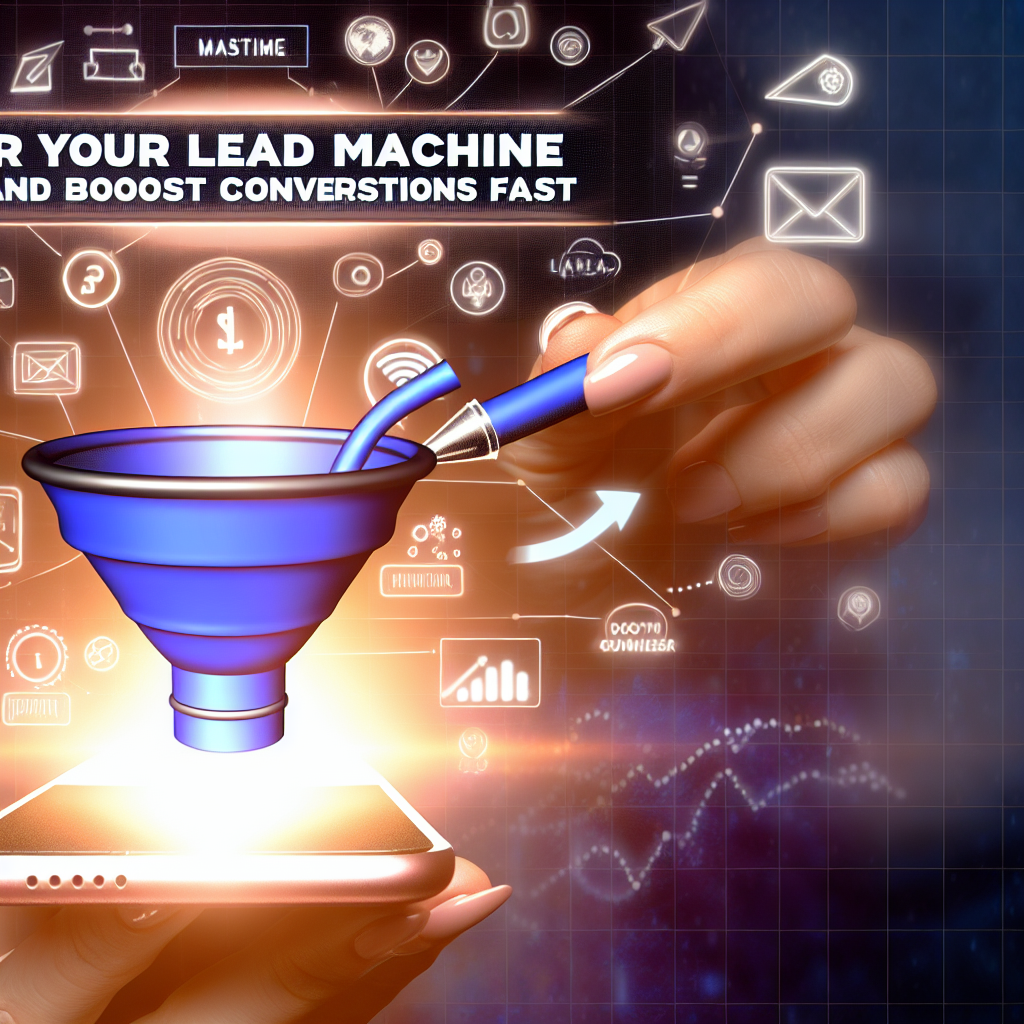
Master Your Lead Machine: Ignite Conversions with Proven Lead Generation Strategies
Estimated reading time: 9 minutes
- Discover how to craft high-converting lead magnets tailored to your target audience.
- Understand lead flow optimization for maximum conversion efficiency.
- Implement automation strategies to capture and nurture leads at scale.
- Learn how to personalize lead journeys to increase engagement and lifetime value.
- Master the metrics that matter most for scaling your lead engine successfully.
Table of Contents
- Understanding Your Lead Machine
- Crafting Magnetic Lead Magnets
- Optimizing Lead Flows for Conversion
- Automation and Nurture Strategies
- Personalization and Segmentation
- Measuring Lead Machine Performance
- Frequently Asked Questions
Understanding Your Lead Machine
A lead machine is the infrastructure that drives scalable, repeatable customer acquisition. It’s not merely a set of tools—it’s an operating system designed to attract, capture, and convert potential clients across multiple channels.
Mastering your lead machine begins with defining your ideal buyer persona. Interview current customers, analyze CRM data, and map key behavioral triggers along the buyer’s journey. Knowing who you’re targeting and how they make buying decisions is foundational to building an effective conversion system.
Crafting Magnetic Lead Magnets
Lead magnets are only effective when they solve a specific pain point for a precisely defined audience. Your lead magnet isn’t a generic checklist—it should serve as a mini-transformation that moves the prospect one step closer to their goal.
Types of High-Performing Lead Magnets
- Industry reports that showcase proprietary data
- Exclusive templates that save prospects time or money
- Interactive tools like ROI calculators or assessments
- Private content such as gated webinars or workshops
Alignment with Sales Funnels
The best lead magnets support your full funnel. For top-of-funnel awareness, educational content like guides or industry stats builds trust. Mid-funnel assets should aid in decision-making—think pricing calculators or comparison sheets. Bottom-of-funnel tools like demos and consultations help close the deal.
Optimizing Lead Flows for Conversion
Lead flow refers to the journey your user takes from initial interest to conversion. Contrary to popular belief, more form fields or aggressive CTAs don’t always mean more leads. The goal is frictionless capture.
Crucial Elements of a High-Converting Lead Flow
- CTA clarity: Each landing page should have only one call to action.
- Smart forms: Use dynamic fields and progressive profiling to minimize friction.
- Psychological triggers: Incorporate social proof, urgency, and immediate value.
Heatmaps and A/B testing platforms like Hotjar or VWO can provide real-time insights into drop-off points and engagement zones, helping evolve your lead flows over time.
Automation and Nurture Strategies
Automating your lead capture is important, but automating context-rich follow-up is essential for conversion. Use tools like ActiveCampaign or HubSpot to segment leads based on activity and behavior.
Nurturing Through Value
- Welcome sequences that deliver a warm onboarding experience
- Lead scoring mechanisms to prioritize outreach
- Behavioral triggers for timely re-engagement campaigns
Leads don’t follow a linear path. Marketing automation should accommodate diverging behaviors and pivot content dynamically. Effective nurture series feel like personal, timely guidance—not bulk email blasts.
Personalization and Segmentation
Generic messaging is invisible in a crowded feed. The modern lead machine adapts dynamically to user data. Personalization doesn’t just mean “first name” fields—it includes contextual content, dynamic CTAs, and predictive workflows.
Effective Segmentation Strategies
- Behavioral: Pages viewed, time on site, downloads requested
- Demographic: Industry, role, company size
- Engagement level: Cold subscriber vs. hot lead
CRM segmentation combined with smart conditional logic allows you to customize nurture sequences, landing page variations, and even ad retargeting themes—resulting in deeper engagement and shorter sales cycles.
Measuring Lead Machine Performance
Without KPIs, your lead machine is just guesswork. From traffic to revenue, each conversion point must be tracked and optimized continually.
Key Metrics to Monitor
- Lead Velocity Rate (LVR): How fast you’re growing your qualified lead pool month over month.
- Conversion Rate by Source: Performance variance across ads, organic, referrals, etc.
- Customer Acquisition Cost (CAC): Total spend divided by new paying customers.
- Time-to-Close: Average sales cycle length from first touch to deal close.
Use dashboard tools such as Databox or Klipfolio to visualize performance and rapidly adjust strategy when needed.
Frequently Asked Questions
What is a lead machine and why does it matter?
A lead machine is a systematic framework for attracting and converting leads at scale. It matters because it enables predictable revenue growth through efficient, repeatable processes—not one-off campaign tactics.
How do I create a high-converting lead magnet?
Focus on solving one urgent problem for your ideal client. Offer practical value with instant application—like tools, checklists, or industry insights. Make the benefit prominently clear in your offer positioning and CTA.
What tools are best for lead generation automation?
Platforms like HubSpot, ActiveCampaign, and Marketo offer robust automation workflows, CRM integration, lead scoring, and personalization features critical for scaling your lead machine.
How do I measure lead flow effectiveness?
Track conversion rates at each stage of the funnel, form completion rates, drop-off points, and landing page heatmaps. Continuously test variables like CTA language, form logic, and offer alignment to optimize flow efficiency.