How Roots Clinic grew from Istanbul to five branches in Saudi Arabia, and what the 7Grounds team changed to lift conversion rates by 35%.
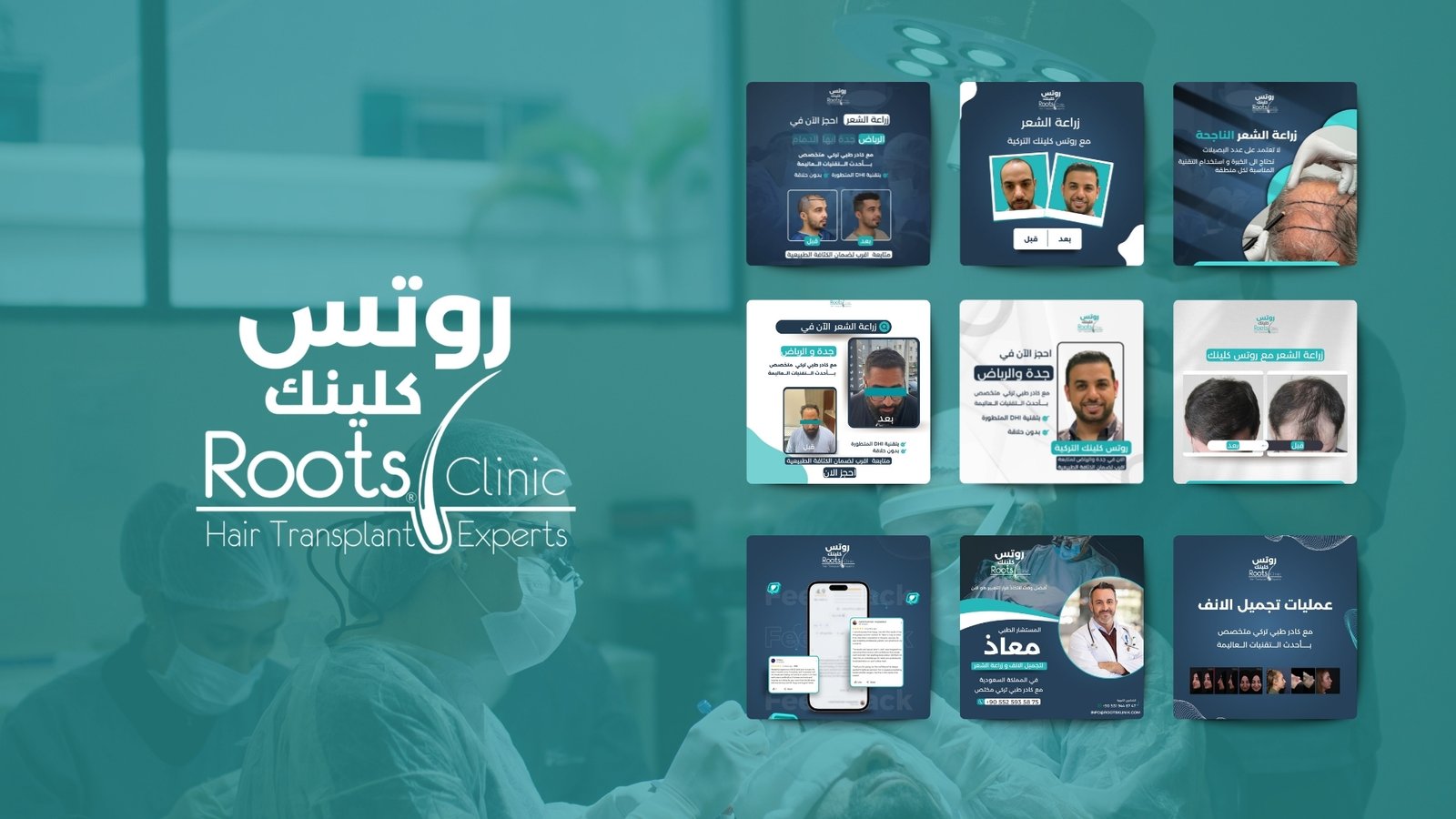
From an Istanbul clinic to five branches in Saudi Arabia: the Roots Clinic case
The short answer: Roots Clinic, a hair-transplant brand built on Istanbul’s medical expertise, grew to five branches in Saudi Arabia. The 7Grounds team worked on the part most clinics underestimate when they cross a border: reading demand city by city, speaking to Saudi patients in their own context, and rebuilding the inquiry journey through a multilingual call centre and WhatsApp. The published result of that customer-experience work is a 35% increase in conversion rates. 7G PRO was later built on the experience of this team.
This case opens our See the difference series. We publish only two numbers here, the 35% and the five branches, because they are the two we can stand behind. Everything else in this piece is the method, described as plainly as we can.
Where did Roots Clinic start?
Roots began as a clinic brand rooted in Istanbul, a city patients from across the Gulf already associate with hair restoration. The ambition was not to advertise a Turkish clinic to Saudi patients from a distance. It was to become a local choice inside Saudi Arabia, with Saudi addresses, Saudi-facing communication and a Turkish medical team behind it.
That distinction shaped every decision. A foreign clinic that advertises abroad can survive on translated ads and a phone number. A brand that wants branches cannot. Patients want to know where the care takes place, who will examine them, what happens before and after the procedure, and who answers when they write late in the evening with a question. Translation answers none of these.
Why do clinics struggle when they enter Saudi Arabia?
The market is open and moving. Saudi Vision 2030 targets raising private-sector participation in healthcare from 40% to 65% by 2030, and regulation now allows 100% foreign ownership of healthcare facilities, according to a Praxis whitepaper summarised by Consultancy-me in August 2025. A Research and Markets report released on 9 October 2026 values the Saudi medical devices market alone at USD 2.6 billion this year. Opportunity of this size attracts competition, and a new clinic brand is judged quickly.
In our experience, clinics entering the Kingdom fail on three gaps rather than on medicine:
The message gap. The brand still sounds like an Istanbul clinic talking to tourists, not a local clinic talking to residents of Riyadh or Khobar.
The trust gap. Patients need reassurance in their own context: who the team is, where they will be treated, and what follow-up looks like.
The response gap. Inquiries arrive from ads and social media, then wait. A patient who asks about cost on Thursday night and hears back on Sunday has usually spoken to two other clinics in between. We looked at this pattern in detail in why international patient inquiries don’t always become consultations.
What did the 7Grounds team actually do?
The work ran in four streams, as described on the published project page.
1. Geo-targeted market reading. Instead of treating Saudi Arabia as one market, the team prioritised high-demand cities, including Riyadh, Jeddah, Khobar and Abha, so that every riyal of budget went where demand was strongest. The order of attention followed the data, not the map.
2. Trust and content. The voice moved from selling to educating. Content was localised around Saudi patient journeys, turning clinical facts into stories residents could relate to, with patient consent and specialist review as non-negotiable conditions.
3. Conversion-ready customer experience. A professional multilingual call centre and a seamless WhatsApp integration meant that every inquiry met a fast, human and informed answer in the patient’s language. This is the stream the published 35% increase in conversion rates comes from.
4. Performance storytelling. Campaigns were built around the transformation journey, balancing the emotional reasons a patient considers the procedure with the rational questions they need answered before booking.
An earlier note, Roots Clinic: a Saudi localization case, covers the localisation principles behind this work.
What does the 35% actually measure?
Precision matters in healthcare, so we are careful here. The 35% is an increase in conversion rates following the customer-experience work: more of the people who reached out went on to take the next step. It is not a revenue figure, not a patient count and not a statement about clinical outcomes. Clinical decisions remained, as they should, with licensed doctors.
Why does a conversion number matter more than reach? Because it is a multiplier. The same advertising budget, the same city and the same offer produce more consultations when the answer is faster, clearer and more local. For a clinic planning new branches, that multiplier is what makes each new location viable sooner.
How did one clinic become five branches?
Opening branches is a business decision that belongs to the clinic’s owners, and we do not claim it for ourselves. What the team could do was make demand legible and the patient journey reliable, city by city, so that each new location opened into a market that already knew the brand and trusted how it answered. Khobar is one of those real branches today. The pattern holds for any clinic: branches follow proven demand, and proven demand follows a journey that converts.
Checklist: before a clinic opens in a new Gulf city
| Question | What good looks like |
|---|---|
| Where is the demand? | A city-level reading before any branch or budget decision |
| Does the message sound local? | Content written for that city’s patients and reviewed by a specialist |
| Who answers, and how fast? | A trained team on phone and WhatsApp, in the patient’s language, with clear hours |
| What happens after the first message? | A defined path: assessment, consultation, booking and follow-up |
| Is every claim approved? | Patient stories with written consent, compliant with local healthcare advertising rules |
| What do you measure? | Inquiry-to-consultation conversion, not views or likes |
What can other clinic owners take from this case?
Start with the city, not the campaign. Saudi Arabia is several markets. Read them one at a time.
Fix the response before buying more reach. If inquiries wait, extra ad spend only fills the queue faster. Our guide to the WhatsApp sales funnel from ad click to booked call shows how to close that gap.
Treat trust as content. Team, location, process and follow-up should be visible before the patient asks.
Measure what moves the business. Conversion and attended consultations tell you whether a city is ready for a branch. Impressions do not.
What does this look like for a clinic today?
The experience of this team is what 7G PRO was built on. On the 7G PRO clinics page you can watch a clinic case, from one goal to a full calendar, and see how the same principles of fast, local, human answers are carried for clinics now.
Expansion is not a bigger advertising budget. It is a market read, a local voice and a team that answers.
Sources / المصادر / Kaynaklar: 7Grounds project page · Consultancy-me, Aug 2025 · Research and Markets, 9 Oct 2026.

7Grounds Team
The 7Grounds team in Istanbul: strategists, designers, marketers and franchise and investor specialists working across Türkiye and the Gulf in Arabic, English and Turkish.