Investing in Syria after sanctions were lifted: where money goes in 2026, sectors for private investors, real risks and a check before you pay.
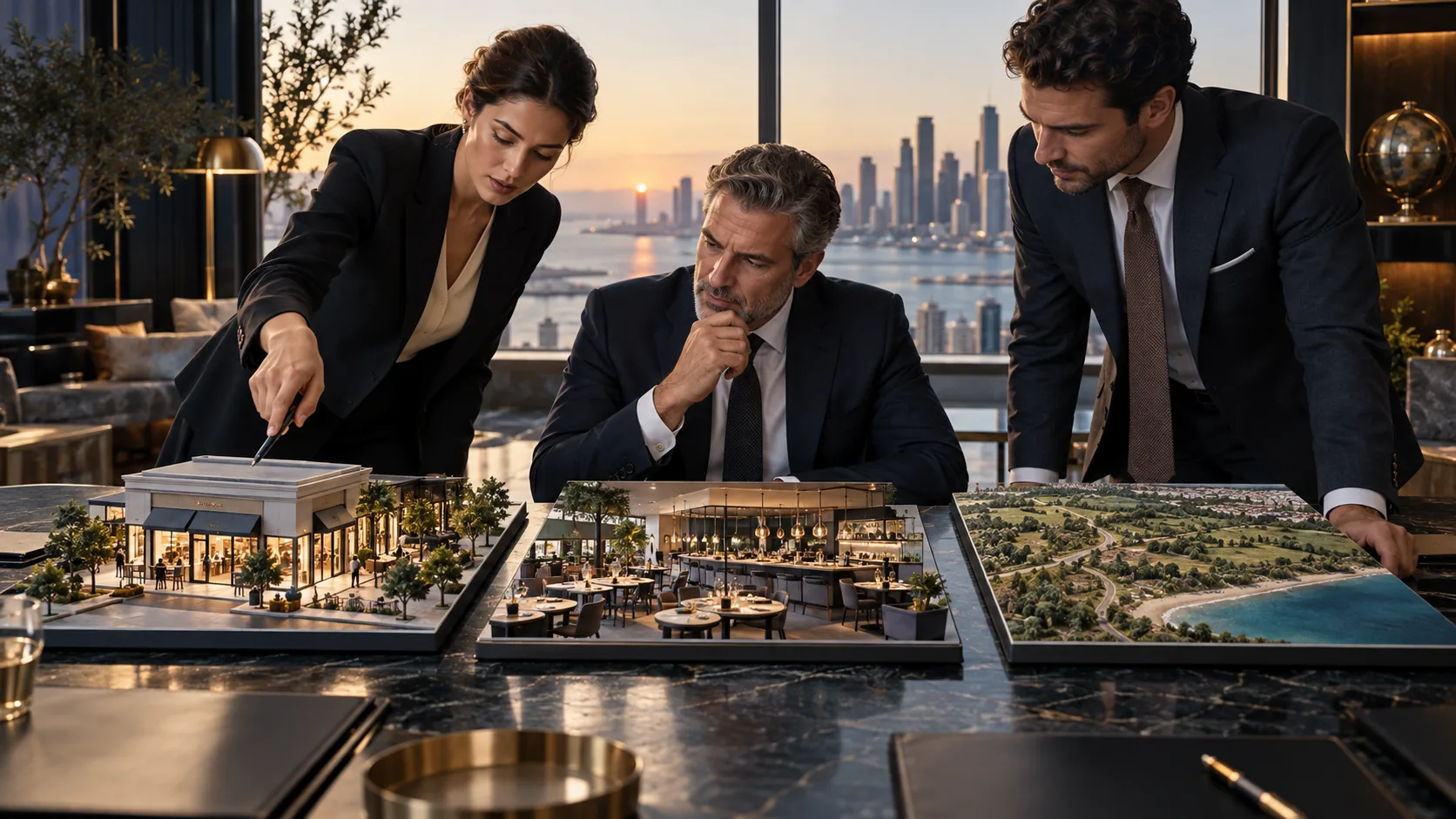
Investing in Syria in 2026: opportunities, sectors and risks for investors
Short answer: investing in Syria after sanctions were lifted is legally possible for most people in Europe and Türkiye, as long as no listed person or entity is involved. The opportunity is real but uneven: the large announced money is state-backed and Gulf-led, banking is still weak, and a private investor’s edge lies in small, verifiable, cash-generating projects, not headlines.
For Arab investors in Germany, across Europe and in Türkiye, Syria is no longer a closed file. Legal barriers have fallen, Gulf capital is arriving, and family ties make the market feel familiar. Familiarity is also the trap. This pillar guide brings together what has changed, where money is actually going, which sectors suit a private investor, what can still go wrong and how to check an opportunity before any money moves. Every figure below comes from a source we opened ourselves, with its date. It is general information, not legal, tax or investment advice, and it promises no return.
Is investing in Syria after sanctions were lifted actually legal?
For most transactions, yes. The EU lifted its broad economic sanctions on 28 May 2025, keeping only measures based on security grounds. In the United States, according to the Treasury’s OFAC FAQ 1220, the Syria sanctions programme was removed effective 1 July 2025, the Caesar Act was repealed on 18 December 2025 and the State Sponsor of Terrorism designation was rescinded on 24 August 2026.
What remains matters more than what was lifted. The EU still applies an arms embargo, export controls and an asset freeze on listed individuals and entities. OFAC notes that 139 persons previously designated under the old programme were redesignated under other authorities. In practice, the deal is legal only if every counterparty is clean: the seller, the landlord, the supplier and the silent partner. Our detailed guide to Syria after the EU lifted sanctions lists exactly which EU measures remain in force and until when.
Where is investment money in Syria actually going in 2026?
The headline numbers are large, and almost all of them are state-level or come from big Gulf groups:
- Saudi package, 7 February 2026: Saudi Arabia announced about 7.5 billion riyals (around $2 billion) across energy, aviation, real estate and telecommunications, including airport development in Aleppo and a new airline, with STC planning more than 3 billion riyals in telecom infrastructure, according to Reuters.
- Eagle Hills, 14 October 2026: after signing an agreement in Damascus on 5 October, the UAE developer said it plans to invest $16 billion to $17 billion in two projects, one in Damascus and one in Latakia; these are plans, not buildings yet, Reuters reported.
- Banking reconnection, 20 October 2026: J.P. Morgan helped Syria issue its first letter of credit in more than a decade, for a fuel products deal with Saudi Aramco, per Reuters.
- Turkish banks, 7 April 2026: Türkiye and Syria agreed to accelerate central bank cooperation, with Ziraat Bank and Aktifbank looking at the market, Reuters reported.
Two cautions. First, an announced plan is not money spent; projects of this size take years and can change. Second, this capital works at a scale and with protections a private investor does not have. The useful signal for you is indirect: where large capital goes, demand follows for suppliers, materials, services, logistics and housing around it.
The size of the need is not in doubt. The World Bank estimated reconstruction costs at $216 billion on 21 October 2025, within a range of $140 billion to $345 billion. And the IMF, after its staff visit, said on 4 August 2026 that it expects double-digit growth in 2026, supported by agriculture, hydrocarbon production, electricity provision, trade and services. Need and growth are real. Neither tells you whether a specific shop, plot or partnership will pay you back.
Which sectors in Syria make sense for a private investor?
The sectors below follow the drivers the IMF and World Bank describe: rebuilding, power, food and services. None comes with a proven return figure, and we do not invent one. Each comes with the one risk that decides it.
| Sector | Why demand exists | The deciding risk | Verify first |
|---|---|---|---|
| Building materials and finishing | Reconstruction need estimated by the World Bank | Payment delays from contractors | Who pays, in what currency, on what terms |
| Solar and backup power | Electricity provision is still being rebuilt | Imports, certification and after-sales | Import route, warranties, service team |
| Food processing and distribution | Agriculture recovering, daily demand stable | Input costs and inflation | Supply contracts and pricing power |
| Healthcare services and supply | Services sector growing | Licences and qualified staff | Licence holder, staff, regulator |
| Warehousing and logistics | Trade growing, Gulf and Turkish links | Land title and customs | Title deed, access, tenant demand |
| Residential property | Housing costs rising, per the IMF | Ownership disputes and exit | Title, inheritance shares, resale route |
| Light manufacturing and workshops | Import substitution, local demand | Power, equipment and spare parts | Power supply plan, buyers before you build |
A pattern runs through the table. The safer projects already have a buyer, produce cash in a currency you can account for, and do not depend on a single permit or a single person. Large developments and land banking are where the headlines are; small operating businesses with real customers are where a private investor can actually check the numbers.
What are the real risks of investing in Syria in 2026?
Sanctions relief removed one barrier. These remain, and they are now the real filter:
- Banking. The IMF describes a highly dysfunctional banking system and says the anti-money-laundering framework must improve for Syria to leave the FATF grey list. Germany’s InfoDesk Syria states that there are still no options for transferring money directly to Syria.
- No state cover. The same InfoDesk notes that the German government is not yet providing export or investment guarantees.
- Inflation. The IMF says inflation, after slowing in 2025, picked up considerably in 2026 on fuel and food import prices, wages, utilities and housing costs. A business plan written in spring can be out of date by autumn.
- Counterparty. A partner or landlord linked to a listed person can turn a legal deal into a breach.
- Title. Ownership, inheritance shares and old disputes are hard to see from abroad.
- Currency. New Syrian pound notes with two zeros removed came into use on 1 January 2026. Always confirm which pound a price is quoted in. We do not publish rates in articles because they move daily.
- Exit. The hardest question is not how money goes in, but how profit and capital come back, legally and through a bank that accepts the route.
Investing in Syria from Germany or from Türkiye: what changes?
Where you live decides which rules, banks and tax system apply to you first.
From Germany. EU law applies before anything else. For financial sanctions questions the competent authority is the Deutsche Bundesbank; for exports of goods it is BAFA, as the InfoDesk points out. German banks often apply US rules in their own policies too. Foreign income and assets can have tax and reporting effects in Germany; our overview of taxes in Germany for Arab savers explains the general rules, and a qualified adviser should confirm your case.
From Türkiye. Trade and banking links are closer, and Turkish lenders are studying the market, but interest is not the same as an open route. Ask your bank in writing which transfers it executes, and keep the same discipline on title, partners and exit. If you are weighing Türkiye itself, our guide to buying a running business in Türkiye applies the same checks to a market with deeper banking.
How do you check a Syria opportunity before you pay?
We use a simple readiness score out of 100. It is a framework for your own review, not a rating of any project, and any single disqualifier overrides the total.
- Legal ownership (25 points): registration, beneficial owners, title deed and licences, confirmed by an independent professional on the ground.
- Banking and sanctions (25 points): every counterparty screened against EU, UN and US lists, a sanctions clause in the contract, and your bank’s written confirmation of the route.
- Financial viability (20 points): accounts, liabilities, rent and staff costs in one currency, with real customers you can speak to.
- Operations and partners (15 points): who runs it day to day, power and supply plans, and what happens if the key person leaves.
- Exit and liquidity (15 points): how and in what currency profit and capital return, and who would buy your share.
Disqualifiers: a listed counterparty, title you cannot verify, payment only in cash or through an informal agent, or refusal of an independent review. Any one of them means stop, whatever the score.
Which red flags should stop a Syria deal?
- A guaranteed monthly return or a fixed payback promised in writing.
- Pressure to pay a deposit before documents arrive.
- Payment to a person who is not the owner of record.
- A memorandum of understanding presented as funded capital.
- Prices quoted without stating the currency or the pound series.
- A partner who will not accept a sanctions clause.
These signals are not unique to Syria. Our list of red flags in business-for-sale and franchise deals covers them in depth, and our guide to buying a franchise or running business from Germany shows the full checking process. If you already hold an offer, send it to Deal Check for an independent first look before you pay.
When is waiting the better investment decision?
Waiting is a position, not a failure. It makes sense when the money is savings you cannot afford to lock up, when your bank will not confirm a route, when the project depends on one permit or one person, or when you cannot visit or send someone you trust. Comparing Syria with markets that have deeper banking and clearer title, such as those in our conservative guide to real estate in Türkiye and the Gulf, is part of good discipline, not disloyalty.
Frequently asked questions about investing in Syria
Is it legal to invest in Syria from Germany in 2026?
In general yes, since the EU lifted its broad economic sanctions on 28 May 2025. It stays illegal to make funds available to listed persons or entities, so every counterparty must be screened.
Can I transfer money from Germany to Syria to invest?
Not directly through normal banking, according to InfoDesk Syria at the time of writing. Ask your bank in writing which route it accepts, and avoid offers that depend on cash or informal agents.
Which sectors in Syria are investors looking at?
Large Gulf capital is going into energy, aviation, telecom and real estate. For private investors, building materials, power, food, healthcare services, logistics and light manufacturing follow the demand that reconstruction creates.
Are there guaranteed returns on investments in Syria?
No. There is no published, verifiable evidence of typical returns for private investors. Anyone who promises a fixed return is giving you a reason to stop.
Should I invest in Syria now or wait?
It depends on the project, not the country. Invest only when title, partners, the bank route and the exit are all confirmed in writing; otherwise waiting protects your capital.
Can I invest in Syria from Türkiye?
Yes, under Turkish rules and your bank’s policy. Turkish banks are studying the market, but confirm the transfer route in writing before you commit.
This article is general information based on sources available on 1 November 2026. It is not legal, tax or investment advice, and it does not promise any return.
Looking for opportunities with clear documents and honest risks?
See the opportunities reviewed by 7Grounds →
Already have an offer? Send it to Deal Check →
See the opportunities reviewed by 7Grounds →
Already have an offer? Send it to Deal Check →
7Grounds Team
The 7Grounds team in Istanbul: strategists, designers, marketers and franchise and investor specialists working across Türkiye and the Gulf in Arabic, English and Turkish.